Working with Chocolate: A Tasting Journey
Good chocolate changed everything for me.
For the longest time, I thought chocolate was chocolate. You bought whatever was on the shelf, melted it, and got on with things. Then someone handed me a piece of Valrhona Guanaja 70% and I realised I had been building desserts on a foundation of compromise.
The difference between cooking chocolate and good couverture is like the difference between instant coffee and a properly pulled espresso. They are technically the same thing. But they are not the same thing at all.
What is couverture, and why does it matter?
Couverture is chocolate with a higher percentage of cocoa butter than standard chocolate. This is what makes it flow smoothly when melted, snap cleanly when set, and feel silky on the tongue rather than waxy or chalky. The cocoa butter content is typically at least 31%, often higher.
For patisserie work, couverture is not optional. It tempers properly. It coats evenly. It sets with a shine. Standard supermarket chocolate can work for brownies and cakes where the texture is forgiving, but the moment you need a smooth ganache, a mirror glaze, or a moulded truffle, couverture is the only way to get professional results.
The three brands I reach for most are Valrhona, Callebaut, and Cacao Barry. Each has a slightly different personality.
Getting to know the big three
Valrhona
The one everyone talks about, and for good reason. Their single-origin range is exceptional. Guanaja 70% is deep, intense, slightly bitter with a long finish. It is my go-to for anything where dark chocolate is the star: truffles, ganache tarts, chocolate mousse. Jivara 40% is their milk chocolate, and it has a proper caramel, malty flavour that works beautifully in buttercreams and lighter desserts.
Valrhona is expensive. There is no getting around that. But you use less of it because the flavour is so concentrated. A 70% Valrhona ganache does not need the sugar adjustments you would make with a milder chocolate.
Callebaut
The workhorse. Callebaut is what most professional kitchens use day to day. The 811 dark (54.5%) is reliable, versatile, and good value in bulk. The flavour is rounder and less intense than Valrhona, which actually makes it more versatile. It is excellent for baking, decorations, and anywhere the chocolate needs to play well with other flavours rather than dominate.
Their white chocolate (W2) is also genuinely good, which is not something you can say about most white chocolates. It tastes of cream and vanilla, not just sugar.
Cacao Barry
Slightly less well known but consistently impressive. Their Ocoa 70% is a lovely dark chocolate with red fruit notes. I use their Extra Brute cocoa powder for everything: it has a deep colour and a rich flavour that standard cocoa powder cannot match.
Tempering: the skill that took me the longest
Tempering is the process of heating and cooling chocolate so that the cocoa butter crystallises in a specific way. Properly tempered chocolate snaps when you break it, has a glossy surface, and melts smoothly on your tongue. Untempered chocolate is dull, soft, and can develop white streaks (bloom) as it sits.
There are several methods. The one I use most is the tabling method: melt the chocolate to 50-55C, pour two-thirds onto a marble slab, work it back and forth with a palette knife and scraper until it thickens and cools to about 27C, then scrape it back into the remaining warm chocolate and stir until the whole lot reaches working temperature (31-32C for dark, 29-30C for milk, 27-28C for white).
It sounds straightforward. It is not. The first dozen times I tried, either the chocolate seized because I let moisture get in, or I over-cooled it on the marble and it turned into an unworkable lump, or I did not cool it enough and it never set properly.
The breakthrough for me was buying a proper infrared thermometer. Taking the guesswork out of the temperature made everything click. Before that, I was relying on the "touch it to your lip" method, which works eventually but takes a lot of failed batches to calibrate.
Matching chocolate to dessert
This is where it gets interesting. Different chocolates suit different applications, and it is not just about dark versus milk versus white.
- Ganache for truffles: High cocoa, intense flavour. Guanaja 70% or similar. The chocolate does all the talking.
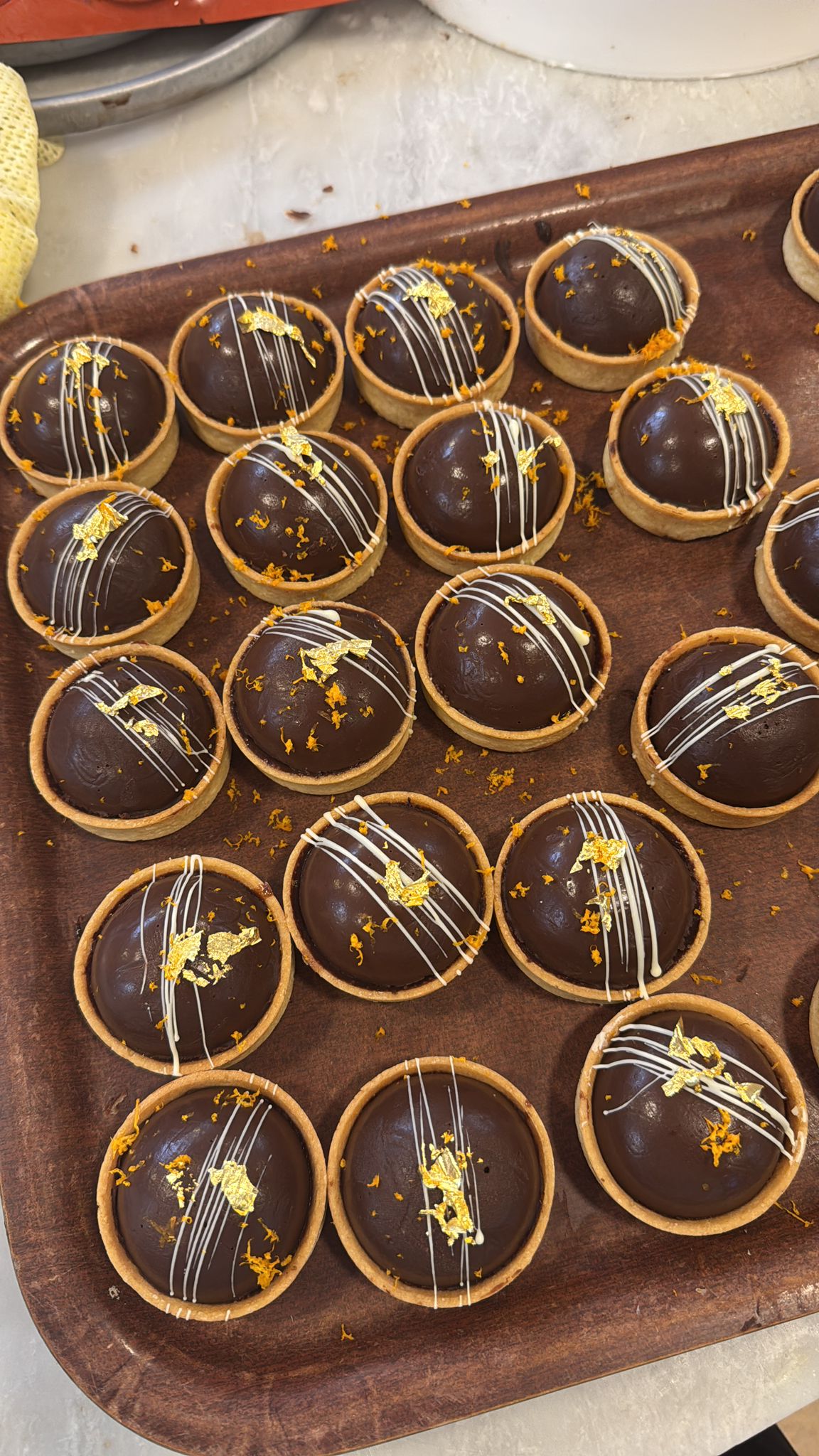
- Ganache for tart filling: Slightly milder, 60-65%. You want richness without overwhelming the pastry.
- Mousse: 55-65%. Too dark and the mousse becomes heavy. You want enough chocolate flavour to carry through the airy texture.
- Buttercream: Milk chocolate or a mild dark (50-55%). Buttercream is already rich; a softer chocolate balances better.
- Decoration and coating: Whatever you like, but it must be properly tempered. This is where cocoa butter content matters most.
- Baking (brownies, cake): Your reliable everyday chocolate. Callebaut 811 is perfect here.
Storing chocolate properly
Chocolate absorbs odours. It does not like humidity. It does not like temperature swings. Keep it wrapped tightly in a cool, dry cupboard between 15C and 20C. Never in the fridge unless it is already in a finished product, because condensation will cause bloom and the chocolate will pick up the smell of whatever else is in there.
If you buy in bulk (which you should, because it is significantly cheaper), decant into airtight containers as soon as you open the bag. Callets and pistoles are easier to work with than blocks because you can weigh exactly what you need without chopping.
The tasting habit
The single most useful thing I have done is to start tasting chocolate on its own before I use it. Not a full formal tasting, just a small piece, letting it melt on my tongue. What do I notice? Is it fruity? Nutty? Bitter? Does it have a long finish or does the flavour disappear quickly?
This takes ten seconds and it completely changes how I approach a recipe. If the chocolate is already quite bitter, I know the ganache might need a touch more cream. If it has fruity notes, maybe it pairs well with raspberry rather than the caramel I originally planned. The chocolate tells you what it wants to be. You just have to listen.
Dark Chocolate Truffle Tart
Chocolate pastry
- 200g plain flour
- 30g cocoa powder (Extra Brute or similar)
- 80g icing sugar
- 125g unsalted butter, cold, cubed
- 1 egg yolk
- 1-2 tbsp cold water
- Pinch of salt
Truffle filling
- 200g dark couverture chocolate (70%), finely chopped
- 250ml double cream
- 30g unsalted butter, at room temperature
- 1 tbsp golden syrup
- Pinch of flaky sea salt
To finish
- Cocoa powder for dusting
- Gold leaf (optional, but why not)
- Flaky sea salt
Method: pastry
- Sift the flour, cocoa powder, icing sugar, and salt into a large bowl. Rub in the cold butter with your fingertips until the mixture resembles fine breadcrumbs.
- Add the egg yolk and 1 tablespoon of water. Bring together with a knife, then your hands, adding more water only if needed. The dough should just hold together without being sticky.
- Flatten into a disc, wrap in cling film, and chill for at least 30 minutes.
- Roll out on a floured surface to about 3mm thick. Line a 23cm loose-bottomed tart tin, pressing gently into the edges. Trim the excess and prick the base with a fork. Chill for another 15 minutes.
- Line with baking parchment and baking beans. Blind bake at 170C fan for 15 minutes, then remove the beans and parchment and bake for a further 5 minutes. The pastry should look dry and set. Cool completely.
Method: filling
- Place the chopped chocolate in a heatproof bowl.
- Heat the cream in a small pan until it just begins to simmer (small bubbles at the edges). Do not let it boil.
- Pour the hot cream over the chocolate. Leave for 1 minute, then stir gently from the centre outwards until smooth and glossy.
- Add the butter and golden syrup. Stir until fully incorporated. The ganache should be silky and shiny.
- Pour into the cooled tart shell. Tap the tin gently on the counter to level the surface and release any bubbles.
- Refrigerate for at least 2 hours, until the filling is set but still slightly yielding when pressed.
To serve
Remove from the fridge 20 minutes before serving. Dust lightly with cocoa powder, scatter a few flakes of sea salt over the top, and add gold leaf if you are feeling fancy. Slice with a hot knife (run it under hot water and dry it before each cut).
The chocolate tells you what it wants to be. You just have to listen.
Enjoyed this? There's more where that came from.
More kitchen notes